Thursday, April 23, 2015

That's a Wrap!

I highly enjoyed reading Kleon's "Steal Like an Artist", it certainly wasn't your typical "textbook". It was very informative and gave suggestions that people won't normally tell you. I will definitely read it again at some point and plan on keeping it on my bookshelf.

While I was reading Kleon's book, I was also reading one of his reading suggestions he listed in the back. The one that I chose was "Rework" by Jason Fried and David Hansson. The writing style and the addition of hand illustrations is comparable to Kleon's book, but it goes more in depth about what it really takes to run a company successfully rather than your own self discovery. While it provides many tips, suggestions, and "inside knowledge", in short chapters, the advice that was the most memorable for me was allowing your customers to outgrow you. I have always thought that a company's product should be constantly updated to keep up with the times and customers, the book says that if you cater towards your existing market and change your product according to their demands, then if they leave you anyways, you are stuck with something only catered to a specific group of people. If you have something that is basic, then you will always have new people coming to you. As they put it, "Small, simple, basic needs are constant. There's an endless supply of customers who need exactly that."


Check out the awesome cover and back. I love the crumpled up paper used for imagery. 


Here are some of the illustrations of topics discussed in the book. 

Thursday, April 16, 2015

With Limitations There Is Freedom

The last chapter of Kleon's "Steal Like an Artist" is short, but it gave me assurance in how I felt about doing anything design or art related in that I need limitations in order to come up with something decent. If you sit me down and tell me to draw something, anything, I would probably spend most of the time sitting there thinking about what to draw. However, if you tell me to draw a flower using glitter glue and confetti, I could probably whip something up in a couple hours. By being constrained, not only are you narrowing down the possibilities, but you are also challenging your mind in how to create and interpret the assignment. When you do something with limitations in place, there is also a greater possibility of creating something truly unique and innovative because it's not expected. If you tell two people to paint a rainbow, and give one person all the colors and the other person just one, surely the person restricted to just one color would come up with something far more creative than the other person because they have to think more about how to execute it.

That being said, I should assign myself a project to do with restrictions. It would be great practice and who knows, it might become my greatest piece yet! lol. As much as I would like to create a flower out of glitter glue and confetti, I don't have either of those. So I would need to think for a bit on what I would like to do.

Thursday, April 9, 2015

Be Boring

Yes, be boring. One would think that people of the art world would be anything but boring due to constantly needing to be creative, but that is the first piece of advice Kleon gives in chapter 9 of "Steal Like An Artist". His reasoning is that it takes a lot of energy to truly be creative, and it's just not possible to mentally be on that level 24/7 without going insane. Therefore, it's necessary to have "down time" and just do things that are boring (but you don't hate) and have a routine. My current routine consists of quite a few things, but it's more or less the same thing every week, which is nice because I don't have to think about what is going to happen because I already know. In fact, when something is different, I find myself constantly thinking about it to make sure I don't forget it. That energy and time I could have used to do something more constructive or perhaps even come up with something more creative at my internship.

The next thing Kleon suggests is to stay out of debt, which is good advice for anyone. Save money where you can, like brewing coffee at home instead of going to a coffee shop every morning, bring your own lunch, and not buying the latest technology when the old one works fine. Not only will this save you money, but you are also saying no to the consumer culture.

Keep your day job. Yes, it sounds....boring, and not exactly one would consider a life achievement, but sometimes you just have to do what you have to do to get the bills paid, until you can support yourself doing what you truly love. There is a benefit to keeping a day job, and that is human interaction and just learning new things. You can also get inspiration where you work just because it's a different environment.

Kleon also suggests keeping a calendar and a log book. The closest thing I have to keeping a calendar is my planner for school. Multiple times throughout my life, I have attempted to keep track of my life with a calendar, but most of the time my life is a routine (as stated before). If there is any change, I will mark it in my planner, but I don't find it worth it to make a note of it in google calendars because of the time it takes to open up the webpage, type in the event, and mark the times, when I can just scrawl it down on a piece of paper. I'll try doing the log book. That might be interesting to see what I did the past week or the past two weeks and remember any fun or strange events that I would have otherwise forgotten. I will start with today since today was a fun day (not sure if you can read my handwriting).


Thursday, April 2, 2015

Keep Calm and Be Kind

In chapter 8 of "Steal like an Artist", Kleon touches upon a few points, one of them being the importance of being kind to others. Not only will it reflect positively on your character, but also allows you to make friends and thus expand your network. I have always said that I would rather have more friends than enemies because you never know when you need help on something or if there will be a great opportunity for collaboration in the future. 

With the internet being a great resource to get your name out and to get information, it's hard not to get caught up with all the trolls online. But that's just what they are, trolls who strive to cause drama over the internet. Kleon talks about how he would get caught up in some argument over twitter, but his wife told him to spend his energy on making something rather than getting worked up about it. His wife is absolutely right. So much energy, time, and effort is wasted on combating trolls that could have been used for something productive that matters in the end. 

Another point Kleon talks about is surrounding yourself with those who are better at you in what you do or want to do. Really that is the only way you will force yourself to improve your work. When you are constantly surrounded by good work, eventually you abilities will grow to reflect that. That is what I am hoping I get out of my internship this semester. The other designers not only produce great pieces of work almost every time, but they also come up with really creative and logical solutions and also are able to work in a timely manner. Those are qualities I would ultimately like to have and even though sometimes I feel my work isn't good enough, I know I am learning and that my work will improve, even if it's only a little. I also like how Kleon mentions that if you are the best in a room, then you need to go find another room where you are not the best. 

There are a few designers that I admire and am currently following through facebook, but one stand out in particular to me and that is Sakimichan ( I think I talked about her before). I really enjoy and am envious of the works that she is capable of doing. They are fun to look and also quite beautiful as well. I like how she takes requests from her fans and is open to share any weaknesses in her pieces. Her latest hurtle is incorporating perspective into her characters and on a few of her latest works, she mentions she is still trying to improve that aspect of her illustrations. She also shares her techniques with the public if you decide to support her, which is reasonable considering her abilities. This touches upon what Kleon mentions in an earlier chapter of the book to share your abilities. If you have a loyal fan base (which you probably have to be kind to), then no one will steal any of your ideas because they respect your work. Kleon mentions that one should write fan letters to those they admire. While I was never much of a writer, I guess if I were to write one to Sakimichan it would go something like this:

Dear Sakimichan, 

I just wanted to write to you to say how much I enjoy your work and the fact you are willing to share it with others. I don't remember how I exactly came about your work, but I always get excited when you post something new. I also find it admirable that you have made tutorials on how to illustrate the way you do. Most people would think one of your abilities would keep it a secret, but you willingness to share makes you that much more respectable in my book. If you don't mind, I would love to know about how you came to where you are now. When did you start drawing and how long did it take you to find your style and be comfortable with posting it online for the world to see? Were you ever have to face discouragement from others? Knowing a little back story would be very inspirational and encouraging for rising artists. Anyways, thank you for the work that you do and I look forward to many more that will come. 

Your fan, 
Catherine 


Thursday, March 19, 2015

Leave The Nest

The internet is such a wonderful thing. Not only can you find essentially any information within a few seconds, but you can also meet people from all over the country and world that you would not other wise meet. In chapter 7 of "Steal Like An Artist", Kleon states that most of his peers he connected with online and also that if you feel like you are stuck where you physically are, you can go to the internet and find people to connect with. To an extent, this a good solution for those who have a hard time fitting in with the people around them, but I feel meeting a person face to face develops a stronger bond and also gives you the social interaction of doing something together that you would otherwise not be able to do.

In the second half of the chapter, Kleon discusses how important it is to leave home at some point, because one you get too comfortable being in an area, then your brain doesn't work too hard because you know what to expect in your daily routine. Once you have the opportunity to leave home, then not only are you in a new place and can experience new things, but you can also meet interesting people. The more different kinds of people you meet, the more knowledge you will get from their experiences in life. It may be uncomfortable and scary being in a new place by yourself, but once you get settled, it is well worth the experience, especially for your creative process. For me personally, I feel like I have met many interesting people that I would not otherwise have met during my time at Parkland. Now that graduation is just around the corner, the next place to meet new and interesting people would be at my future job because there are always interesting people at design firms. Maybe I should pick up a new hobby as well. We'll see....


Steering away from Kleon's book for a bit, back in my fourth post, I posted a picture of 10 books that I would want to read at some point. Fortunately, I did have the opportunity to read one of them and that is "Logo Design That Works: Secrets for Successful Logo Designs" by Lisa Silver.


It's a short book, but I personally found it very useful when trying to come up with a logo design for a class project. Some other logos books I have seen just bombard you with hundreds of logos, one right after the other, without any information on it other than what company it's for. This book is different because with the logos it features, it has descriptions of the creative process the designer went through to get to the final result as well as the meaning behind designing it in a specific way. There are also a few logos where they show the different stages of sketches that the designer went through. Just being able to read what the designer was thinking allowed me to not only learn about what went into it, but most importantly it showed me how I should go about thinking of a logo design. Some of the logos look a bit dated, but again, the important thing is to understand the thought process that went behind designing them. That knowledge is invaluable because now I can apply it to my future projects. In fact, I enjoyed this book so much that I actually checked out the full book that not only contained the logos, but also magazine layouts, brochure designs, and identity systems titled "Graphic Design that Works". 


Here is a glimpse of what's inside the logo section:


This is what a typical page looks like. It lists the client, creative director, designer, firm, process description, and what makes the logo work. 


Here is one of the rough draft examples. It's nice to see that professionals go through the same process as us in terms of constantly revising until they have what works. It's also fortunate that they included the sketches that were done.


Here is one of their logo evolution examples. It's interesting seeing the change of identity that went on throughout time, with each reflecting the era that it was used in. 


Overall, I highly recommend the logo book for people who fine themselves stuck on designing logos. It's very useful and enlightening reading what went on "backstage" and it allows you to go into the designer's head. It's not a long book with only a couple paragraphs on each page, so it won't take up too much time to go through the whole thing. 


Thursday, March 12, 2015

Sharing Your Thoughts

When my graphic design class has the opportunity to speak with a professional, a consistent question that comes up is how to get your name out there so people can find you? The first thing that Kleon discusses in chapter 6 of "Steal Like An Artist" is to enjoy being obscure while you can. When you first start out in the real world, chances are your name won't be known (at least not yet). Take that time when there are no expectations of you and experiment with creating things or create things that you enjoy. Once your name does become more well-known, then there is a standard you must uphold with your designs and you must design things that not only you like, but most importantly that your client likes. It won't just about your ideas and thoughts so enjoy the time of being unknown.

Just because being unknown has its benefits, you should always network by talking to people and now a days, have an online presence so your work can be accessible to pretty much anyone in the world. Your online presence doesn't have to just be about your designs, but can also be about your daily thoughts and philosophies. It's important to wonder about the things around you and allow other people to wonder with you. That's how you get a following of people who care about what you think, and therefore will care about your work. Creating a blog is a standard now, and it really keeps you engaged because you must make posts consistently and each one you create must be as good, if not better, than your last post since the latest post will be the first one seen by people. That being said, I should try to do blog posts consistently. I'm thinking about starting a new blog where I post a variety of content, not only my works, but also any thoughts I might have or interesting thins that occur in my life. I want to come up with a good name and url for it, so I need to incubate this for a while.

Thursday, March 5, 2015

Productive Procrastination

Everyone procrastinates at some point in their lives. I, for one, am the queen of procrastination and have been for some time now. I have been trying to get better at not doing it, but you know what they say, old habits die hard. I probably procrastinate on not procrastinating to be honest. In the 5th chapter of "Steal Like and Artist", Kleon addresses this and encourages productive procrastination. If you are going to procrastinate on something, it might as well be something worth while like playing music, or going on a walk, or reading, but it has to be something that you truly enjoy doing. Not only will it make you happy doing it, but it will also benefit your actual job because it gives you a break from thinking in just one manner. Having and maintaining a hobby is important for productive procrastination because it is part of who you are and what makes you whole.

This is especially important for designers because we are always in constant need of inspiration. The more experiences we have and the more we do that is outside of design, the more ideas we will have. Sometimes, it's also nice to just sit around and do nothing. There is nothing wrong with that as long as you're not doing it all the time. I probably do it a bit more than I should. Every time I say that I'm not doing anything, 95% of the time that means I am on the internet either watching videos, reading random articles, checking the news, or playing games.

As for hobbies, I have a few, such as ballroom dancing, playing tennis, and playing video games, but my favorite one would probably have to be cooking. I love to cook all sorts of things, American food, Chinese food, and sweets. I even bought a fancy ice cream maker just so I can make ice cream from scratch (three words: nutella ice cream). There is something very relaxing and satisfying to me about getting all these ingredients that are not anything special by themselves and turning them into something delicious (most of the time, lol). It's also fun sharing them with other people and is a great way to bring people together and have a good time, as long as I don't have to wash the dishes afterwards. I was going to bake banana bread today anyways because I had some overly ripe bananas that needed to be used soon, so it was perfect timing with reading this chapter.


Behold! the ingredients to embark upon this baking adventure. 


Now it's ready for the oven...


It finally finished baking! This was my first time using whole wheat flour, so I hope it comes out tasting ok and the texture isn't too weird. 


Thursday, February 26, 2015

Back to Basics

Technology has come a long way and has made our lives more convenient in ways never thought possible, but sometimes it causes us to lose what it means to be human and an individual. It causes us to be more introverted by absorbing all of our attention to a monitor rather than enjoying the environment that we are in and with the people that we are with (can't tell you how many times I've seen a group of people eating out and all of them are looking at their phones). This unfortunate consequence of the advancement of technology has also seeped into the world of art and design. While there are many perks with making art digitally, something is lost in the process of going from your mind onto the screen. The computer can make the art perfect, sometimes a little too perfect that it loses the personality of the artist. For example, everyone can draw a circle in illustrator, and all the circles will look exactly the same, but if you tell those people to free hand a circle, none of them will be identical. Each one will have some sort of feature that reflects the kind of person the artist is.

Going back to the basics of creating art with your bare hands is the topic of chapter 4 of "Steal like an Artist". Engaging the senses and feeling the physical process of creating art can not only help stimulate creativity more, but also makes you accept the mistakes that you make and incorporate it into the finished piece. It's difficult to ctrl+z anything that's not graphite. While it may seem tempting, starting our ideas directly from the computer is not a good idea. First of all, unless I'm doing something that is solely type based, I find it extremely inefficient just formulating my ideas because you're basically doing everything relevant to the x and y directions. For example, I needed to draw a swirly line as part of a logo. It takes me 2 seconds to do it on paper, but took me about 15 minute to do it in illustrator with the pen tool, and it still doesn't look the way I want it to. Secondly, as Kleon puts it, it cause us to edit and delete our ideas before they have fully matured because the delete button is right there. When I sketch ideas in my sketch book, I rarely use the eraser, so if an idea isn't good, I'm still looking at it out of the corner of my eye as I'm doing a different sketch. Quite a few times I have re-sketched a rejected idea to see if it would work in a different way.

Kleon suggests to have an analog and digital desk to generate ideas and do work. The analog desk would have nothing digital on it, just paper, pens, markers, paint, etc.... and is great for generating ideas and getting the bases of your work out. The digital desk would be used for editing and publishing the work. I obviously have a digital desk already, but setting up an analog desk sounds like a great idea, but at the same time I can see myself struggle with stepping away from my laptop, as sad as it sounds. I do have an extra desk that I haven't been using, so I'll organize it as an analog station.


This will have to do for now. 


I drew an octopus because they're awesome. I was planning on watercoloring it and then inking the outlines, but I don't want to ruin it, especially since I'm not that great of a painter. Plus there are still a few adjustments I would like to make with the tentacles. 

Thursday, February 19, 2015

Do what you like

The next chapter of "Steal like an Artist" is fairly short, but hits on an interesting and enlightening point, do what you like. Now I and everyone else has heard this phrase said probably millions of times already, but upon reading Kleon explanation of it, I realized it goes a lot deeper than just finding a hobby or job that you enjoy. If you find something you enjoy, like in music, movies, books, etc...create your own versions of those things. It's a bit like fan-art and fan-fiction. If you particularly like something, you most likely have had the desire to create something similar with your own take on it that might be better than the original. I know I am fan-fictioned and fan-arted a lot of TV shows in my head, but it never really developed into something physical and just remained as ideas. Perhaps I should do sketches of those in order to improve my drawing abilities.

One of the specific points Kleon makes is to not write what you know, but write what you like and what you would want to read. This can also be applied to your life direction and career when you are unsure of what to do, just think "What would make the story better?". If I were to write out my life, I am not sure if I would change much because all of my experiences have contributed to who I am now. I guess the only things I would change is reading more books as a child and procrastinating less. As for writing my own future, I'm not sure what I would write that isn't too vague. I would hope that I would still be doing design as a full time job, maybe end up having a small studio of my own. What I know for sure is that designing is what I want to do with my life and this is how I will contribute to society. During my senior year of college when I was studying biology, I kept having this feeling that my life path after graduation will have nothing to do with what I was studying (I told some of my friends this too). Something did not feel right with the idea of me staying in the scientific world (as much as I would have liked to). But now, studying design feels right for me because I have a strong desire to learn and experience more of it, which never happened during my undergraduate years.

I think I strayed from the topic of this blog post a bit, so back to the book. Kleon also suggests to think about the work your mentors have made. What would they have changed or done better? or maybe perhaps worked with another one of your mentors? This is interesting to think about so I will try to combine the work of my current mentor of Massimo Vignelli and my previous one of Chip Kidd. This will require some thought and research, so I'll be back...


UPDATE: So I'm back and this is my version of what Vignelli and Kidd might create should them and myself collaborate.


For those who are interested in my thinking process, here is goes. Since Kidd is famous for his book covers, I figured doing one would be the most appropriate where the cover represents something that occurs in the book. I went to my book shelf and picked this one because I've read it and I remember what happened (plus it's a good book). I decided to do a swiss design to incorporate Vignelli's style and to make the design more abstract, which I think would appeal to both of them. The grey grid represents the people of the dystopian society where everything is in order, under control, and without choices. Then there is the Giver, who is the sole possessor of everyone's memories of the past and emotions, who must pass them on to a new person, ie Jonas. The diamond represent Jonas and his process of breaking free from society due to the memories given to him by the Giver, which is why they are the same color. I also purposely didn't align the title with the grid because the Giver is not fully aligned with society. Overall I like how it came out and would appreciate any feedback to make it better. It was really fun trying to think like the two designers and occasionally I would have conflicting thoughts, like putting the blur on the grey squares. I don't think Vignelli would do that, but I think Kidd would.

Here were my inspiration pieces from both of them that helped me with the brainstorming process:

Chipp Kidd


Massimo Vignelli 


Thursday, February 12, 2015

Fake it until you make it


I finally moved on to the second chapter of "Steal Like an Artist" and there were some points that really resonated with me and my experiences. The first being that no one knows what they're really doing. While I know this now, I really wish that I could tell the younger me that. I was raised under the impression that all adults knew exactly what they were doing and never made mistakes. If they did, then they would be fired from their job. That way of thinking made me extremely fearful of doing something new, or even getting a part time job as a teenager because I was afraid of making mistakes and failing. While it's great if someone actually knows what they're doing, it's not the end of the world if you don't and it's part of the process of growing up and discovering yourself.

This kind of brings me to the next point the book makes which is "Fake it until you make it". A lot of times, the difference between whether the glass is half empty or half full, is what mind set you are in. If you are in area that you don't have much confidence in, sometimes you just need to pretend that you are damn good at something you are not and that will get you in the mind set of actually becoming good at it. A great point of view of this is a segment from a longer TED talk by Amy Cuddy.

The final point Kleon makes is that you want to emulate the person you look up to, rather than imitate, because when you are imitated, you stop developing who you are as an individual because you are only focused on another person. When you emulate someone however, it means to you take the ideas or actions that have made the successful and put your own variation on it. By doing this, you are creating something that is truly your own. The more people you decide to emulate, the more it becomes something completely new and unique.

On page 20, Kleon states "Don't steal the style, steal the thinking behind the style". I feel like this can be most applied to current project my graphic design class is doing of creating a branding campaign for a local science and technology group. In my previous post, I looked at a few books in the library and checked out one of them called, "Logo Designs That Works: Secrets for Successful Logo Design" by Lisa Silver. In the book, they have a bunch of logos, some popular, some not, and it explains what the designers were thinking and aiming for when designing for the client. Some of the logos are a bit dated, but the way the designer thought about it is still applicable for today. Getting that designer thinking process was extremely valuable for this project and I know I would have struggled with coming up with concepts if I were to just look at inspirational logos without any of the insight of what went into it. So when emulating inspirational works, you cannot just copy what they did. You have understand the thinking process the designer went through so that you can use that same thinking process to not only create something new, but also so you can apply it to your future work.

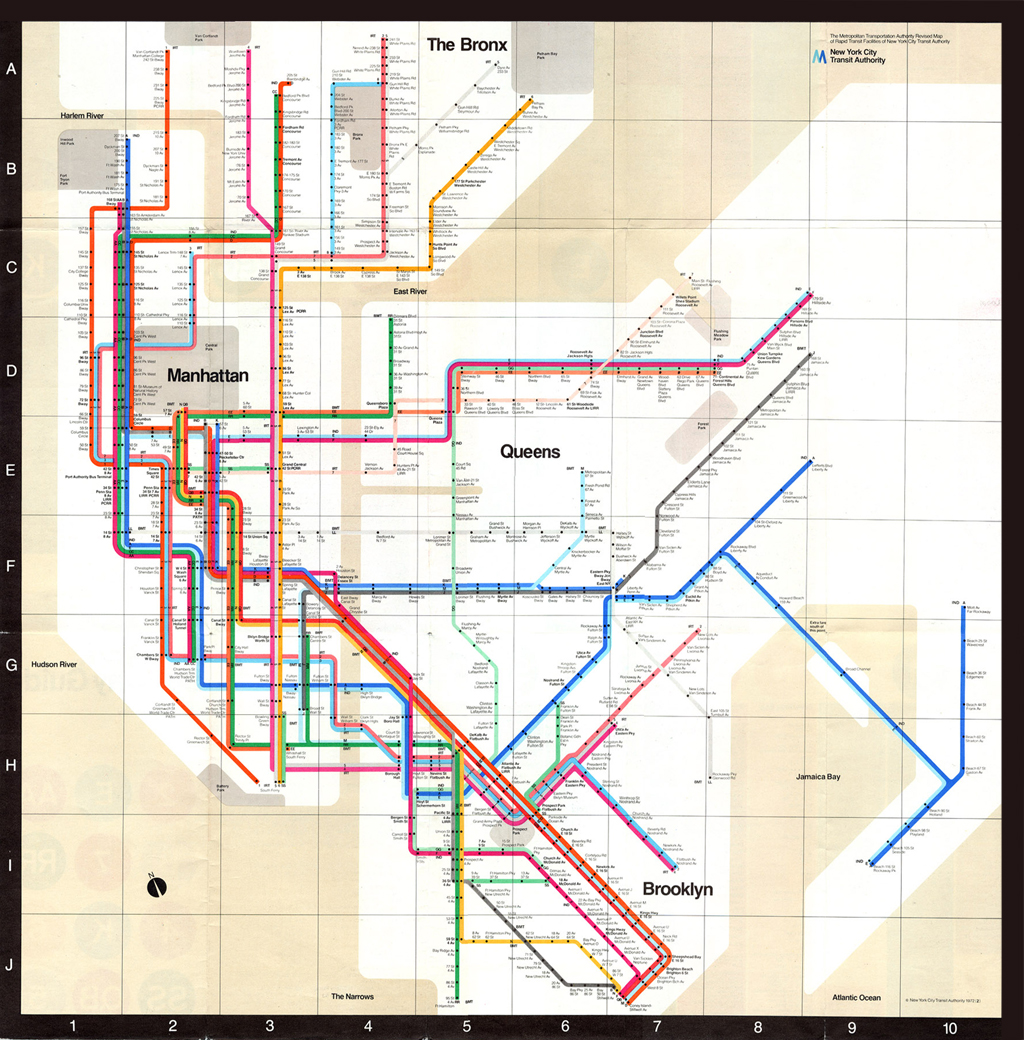
Going back on the idea of imitating vs emulating, Kleon provides a list of the differences between the two in a "good theft" and "bad theft" chart. Prior to this post, I had stated that I wanted to use Chipp Kidd as a mentor, but even though he is an amazing designer, I think I'm going to change it to Massimo Vignelli. I find that when I do projects that are more open ended, I tend to emulate swiss style design. I just love how simple and clean the style is and how it reduces images to the most basic forms. I plan on using the chart to study Vignelli's work by making sure I study as many pieces I can by him and try to keep his style in mind when designing my next "open ended" project. One of his most iconic works is his rendition of the New York City subway system:


I tried coming up with something that emulate this work and this is what I came up with:


Yes, I included Pluto because Pluto will always be a planet to me :) and yes, the spacing is (to the best of my ability) to scale based on the perihelion values (except for Pluto).


Thursday, February 5, 2015

Reading

On page 20 of "Steal Like an Artist", Kleon suggests that one should always be reading. I couldn't agree more as reading not only expands your ideas, but also can help you be articulate when speaking and also become a good writer. Unfortunately, I know I do not read nearly enough as I should be. Growing up my parents owned a small restaurant and so they did not have the time to read to me, so I just watched TV as they worked all day. That got me into the bad habit always preferring to watch TV or playing video games over reading. I am convinced that I would be more expressive with my ideas, be able to debate better, have a better memory, and be a better writer if I had read more as a child and as an adult. At one point I did get better and read ever night before bed, but then my mom insisted on getting me an iPad (cause that's what all the cool people got) and it all downhill from there. 

I went to Parkland's library and got some books that seemed interesting to me. Some of them are design books, but the others are kind of random, but seem intriguing based on their covers and/or description. The one I will probably read is one of the design books since I could apply it to my classes, and since I will be graduating soon, I could use all the design related knowledge I can get. 


There are also a bunch of books that I have been wanting to read but just haven't gotten around to it yet. Some of them I was supposed to read in high school, but never did in my classes for some reason. Others I have seen other people read, and therefore I want to read as well. Here are some that come to mind, but I will probably try reading the books I already have at home before going out and buying any of these.


In the back of "Steal Like an Artist", Kleon made some recommendations on what books to read. After looking up what each one was about, I am eager to get a hold of "Rework" by Jason Fried and David Heinemeier Hansson, and "Ignore Everybody" by Hugh MacLeod. Both of them sound interesting to read and can hopefully help and/or improve my creative process and to help me think more like a designer. 

I really hope that when my life becomes stable, hopefully with a decent job, that I will start reading regularly. The covers and descriptions can be so interesting, but I just have a hard time focusing all my attention on reading text for a long period of time, but I really want to. This is also probably the source of my procrastination problem now that I think about it, or at least part of it. Perhaps tonight I will try to go to bed at a decent hour and read for a bit. 

Thursday, January 29, 2015

Influences


"You are, in fact, a mashup of what you choose to let in your life. You are the sum of your influences."

That is a quote on page 11 of Steal like an Artist and I couldn't agree more. Whether we acknowledge it or not, who we are in the present was based off of our past experiences. Because of this, we are constantly changing, even if it is just a little bit, because we are always exposed to different things, people, and experiences that can influence us. Now you can (to an extent) choose who can influence you based on the people you allow into your lives. Sure there's family and such where you don't have a choice, but sometimes you get the most influence from external sources such as what I mentioned before, the things, people, and experiences.

For me personally, I try to go through life with an open mind and try to allow a variety of experiences and people into my life. Being of Chinese decent, sometimes I have to straddle between the Chinese culture and American culture, especially when it comes to my family, but I fully embrace it because it has made me to who I am today. I have this wonderful opportunity in life to experience two cultures so I don't want to waste it nor take it for granted. When it comes to people, I try to be open minded of them. I truly believe that everyone can teach you something that you don't know already and if you immediately shut them out for whatever reason, you lose the chance to gain knowledge.

Overall I am happy with the influences I've had in my life, but I am definitely open to have more and desire to have more, especially since I have changed my studies from biology to graphic design. I did not have that many artistic influences growing up, but now I feel I must if I want to be successful as a designer. One of the biggest changes I've noticed about myself since starting graphic design is that I appreciate art more, especially modern art. Now when I go to art museums, I specifically look for the modern art section because I can apply what I have learned in class and analyze the art instead of just looking at it.

In order to get more graphic design influence, I will start paying more attention to the designers of pieces that catch my interest rather than just focus on the piece itself. Since I enjoyed his TED talk so much, the first designer I will look into is Chip Kidd. Variety of book covers he has designed is just amazing and it will be beneficial to understand more of what his thinking process is when designing one. Here are a few of his book covers that he explained in his TED talk.


I had to do a little research to find out what designers influenced Kidd, and the two names that came up were Peter Saville and Alvin Lustig. These are some of their works...

Peter Saville


Alvin Lustig

MD_Lustig_Ghost_640

MD_Lustig_IWillTry_640

MD_Lustig_Lorca_640


Thursday, January 22, 2015

Steal Like an Artist


So this is the text book that I am reading for my graphic design class. I have only read the first chapter, but so far I find the book engaging, simple to read, and informative in terms of how to think creatively relative to what has already been done. I appreciate how casual and straight forward Kleon presents his ideas and philosophies because it makes it sounds like advice you would get from a friend with experience.

The title of the book already makes the book seem a bit controversial, because one of the golden rules to life is to not intentionally steal ideas and works from other people and pass it off as your own. But the question I have is where does the line fall between being inspired by a particular piece of work or artist and just flat out stealing? To me, I feel like if you are not willing to acknowledge where you get ideas from when they are not genuinely original, then that's stealing. This is the only thing I could come up with at the moment, so if anyone has a different opinion, I would love to hear it. 

Coming up with an original idea is very difficult, that's why not everyone is an entrepreneur. Everyone is constantly being influenced by things that already exist and therefore ideas, in art or anything else, are just building off of what has already been done. I think when an original idea does emerge (and it's a good one), it tends to be praised by society and rightfully so. Usually the idea is a very simple one, but for some reason it hasn't been done before and the majority population can relate or utilize it. 

The book says that a great way to generate ideas is to collect things that you love, because you are only going to be as good as the things you surround yourself with. I have heard this from another graphic designer before, and ever since then, I've had an inspiration box which I put anything related to graphic design in that I appreciate. I have everything from business cards from local restaurants, to posters from museums. It's a great way to get inspiration from something that you know has been paid to be printed and distributed rather than just posted online for free. However, there are some great resources online as well, and the variety is far greater than what I can find in the local area. For me personally, I have a bookmark folder on my browser specifically for when I come across interesting design related sites. Currently I have about 25 pages bookmarked, so it's a pretty good process for me.

Another way to get inspiration is to have a "mentor" who's work you can follow. I currently don't have a specific designer that I consciously look up to. My interests tend to be spread among specific pieces of work rather than the artist/designer themselves, so perhaps I should do more research into who I can aspire to be like. Having a mentor can be very useful because then you can see their process and what they did in order to reach where they are now and use their phiolosophies and experiences for your own self discovery.

Overall, I think I am going to enjoy reading this book over the next few weeks. It is a really short one that I can probably finish in a day or two, but perhaps letting the lessons in each chapter marinate in my brain a while can be a good thing. There are also many quotes in the book, which I find are quite inspiring. Here are two from the first chapter that I feel like I can apply to my life:


"The only art I'll ever study is stuff that I can steal from." –David Bowie

"Whether I went to school or not, I would always study." –RZA

The David Bowie quote was enlightening to me because you really should only study things that you genuinely like and therefore would want to apply some principles of it to your own work. If you don't have the desire to steal some idea or principle from something, then obviously it is not stimulating enough.

The RZA quote is not anything new to me, but rather reinforces the idea of always learning something new and expanding your knowledge, even when you don't have to. Studying is really a form of discipline that is a necessity to be successful in life because not only do you need to be disciplined for when you work for someone, but also when you are in charge of other people. Without it, then there is no motivation and without motivation, there is no reliability.  

Thursday, January 15, 2015

Intro

Hello everyone and welcome to my Graphic Design III blog!

First a little bit about myself for those who do not know me. I grew up in New Hampshire and went to college at the University of Rochester and graduated with a BA in biology. Afterwards, I worked in a lab as a lab tech at UIUC and discovered that I did not want to do research as a career. During my time at the lab, I did some schematic illustrations for the researchers and discovered that I enjoyed doing them, so I enrolled in the graphic design program at Parkland and couldn't be happier that I did. For once in my life I have a direction that I want to go in instead of wandering about, and it makes life a lot easier knowing what you want to do. 

My creative process is pretty much what we have learned in class, first researching and talking to the client, incubate, sketch, and start executing a few of the better ideas. Finding inspiration can be hard sometimes, depending on the project. Even though the internet is a quick and easy resource, I find that sometimes the results are pretty much the same style or flavor. I've actually started an inspiration box (which is still the box that my monitor came in) where I just put a variety of things that I find with good designs that I like to refer back to. 

Coming up with a novel idea is probably the hardest thing to do, I always think, what hasn't been designed already? The best thing I can think of that helps with generating new ideas is to experience as many things as possible, whether it's traveling or finding a new hobby. When you start experiencing new things, then you start thinking in new ways. 

I believe that being creative is very important to our culture, because it's how we come up with new ideas, new ways of thinking, and new solutions that helps man kind move forward, whether it's in art or sciences. Creativity in graphic design is essential because the purpose of graphic design is to communicate information in an engaging way so that it's memorable for the person looking at it. Without it, then your message just becomes a blur in today's fast paced society. 

This is a holiday card I designed intended for Parkland in Illustration last semester. I when trying to come up with what to do for it, I distinctly remember thinking that if a snake had the mental capacity to build a snowman (cue Frozen song), wouldn't it build one in its own image? It would obviously make a snow-snake and not a snowman...yeah, sometimes I think about these things too much.